
Back Pain Treatment
Back pain — whether from long hours at a desk, physical strain or ongoing muscular tension — is one of the most common reasons clients visit Shifa Roots. Our cupping sessions are designed to ease tension across the back and support relaxation and recovery. If you've been searching for back pain treatment Birmingham, this page explains exactly how our Hijama cupping sessions work for both chronic and acute back pain.
Back pain affects people differently — for some it's a dull, constant ache across the lower back after years of desk-based work; for others it's a sharper, more localised discomfort following a specific strain or awkward movement. At our Birmingham Hijama clinic, we see both patterns regularly, and our approach adapts accordingly. Chronic back pain, built up gradually over months or years, often responds differently to cupping placement and frequency than acute back pain following a recent injury, which is why your first consultation matters so much in shaping your treatment plan.
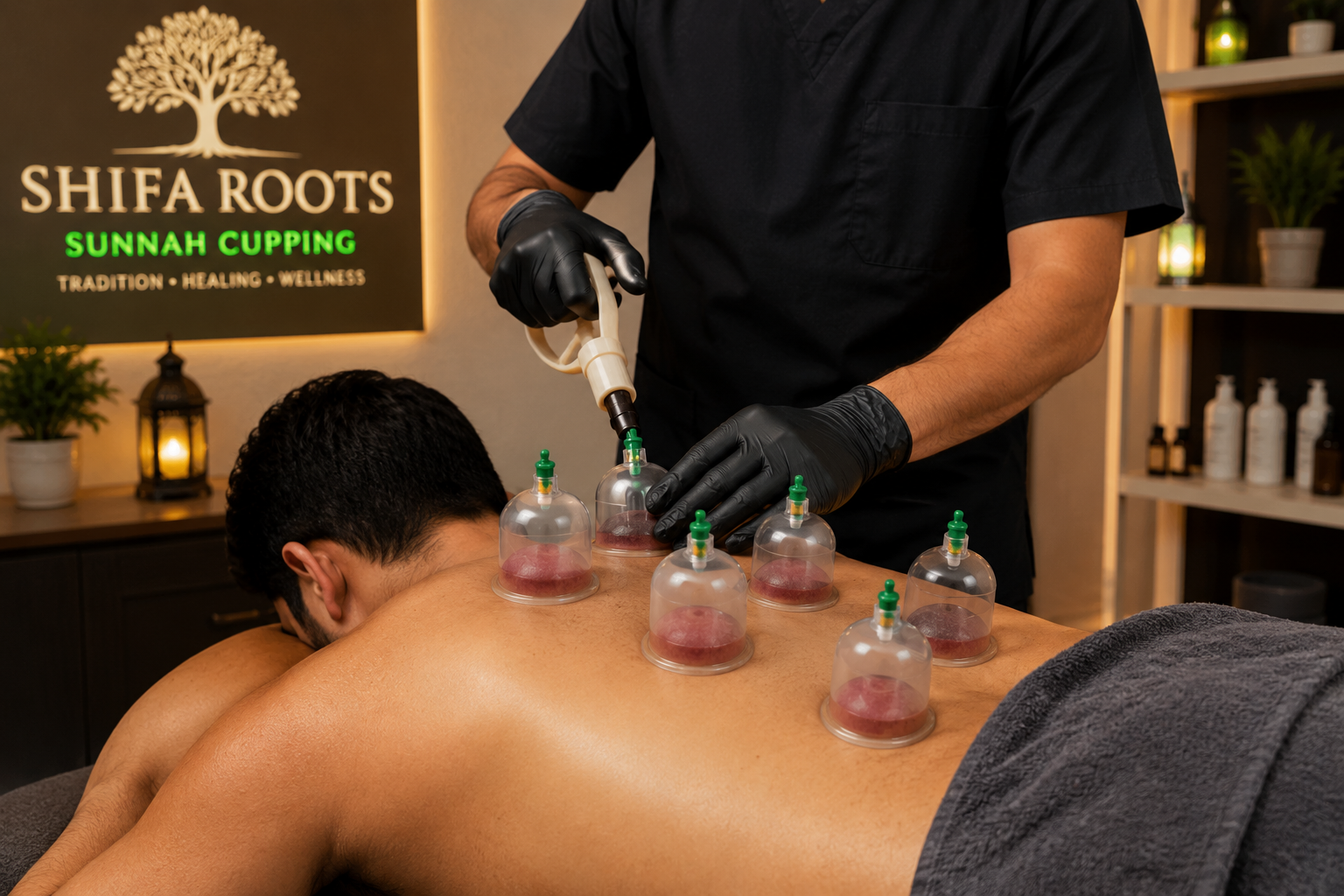
Who This Is For
Chronic Lower or Upper Back Tension
If you spend long hours sitting, whether at a desk, driving, or in other seated roles, tension tends to build gradually across the lower and upper back — exactly the kind of pattern our back pain treatment Birmingham sessions are designed to address.
Recovering From Muscular Strain
Acute strain from lifting, exercise or sudden movement can leave the back feeling tight and guarded. Many clients book cupping sessions in the weeks following a strain, once any initial acute injury has been assessed, as a natural complement to their recovery.
Natural & Complementary Approach
Not every client has a specific diagnosis — some simply want a natural, Sunnah-rooted approach to ongoing back tension, used alongside good posture habits, movement and, where relevant, medical advice.
What to Expect During Your Session
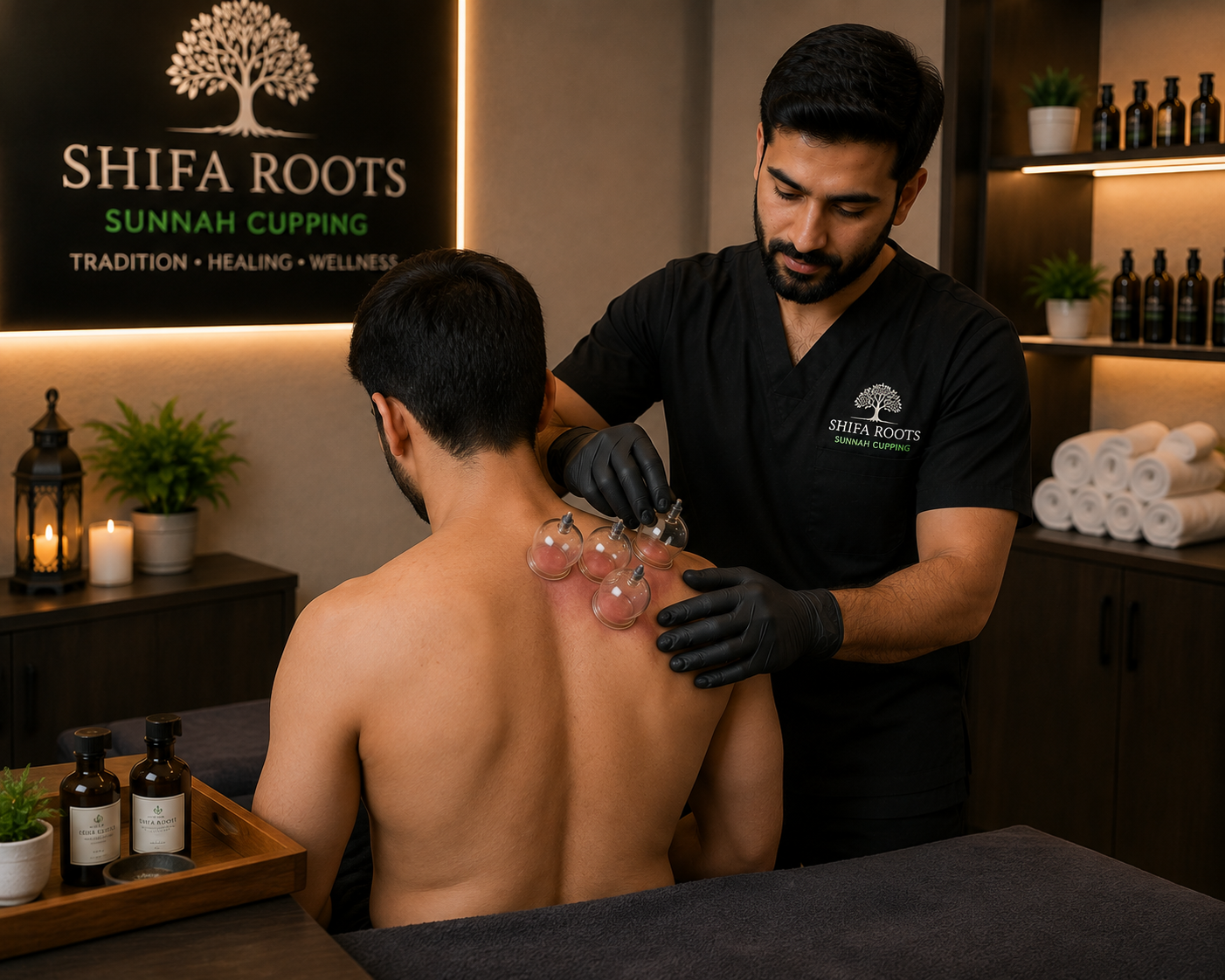
Your session begins with a short consultation about where your pain is felt and how long you've experienced it, followed by cupping placement tailored to your back and posture. We'll also share simple aftercare advice to support your recovery. Depending on whether your back pain is more localised or spread across a wider area, your practitioner may focus cupping on specific points along the spine and surrounding muscles, or take a broader approach across the upper and lower back.
As with all our services, you'll have the choice of wet cupping (Hijama) or dry cupping, sterile single-use equipment throughout, and a calm, unhurried appointment with plenty of opportunity to ask questions before, during and after your treatment.
Most back pain treatment sessions run between 30 and 45 minutes, beginning with your consultation and finishing with aftercare guidance. Your practitioner will typically work along the length of the back, focusing more intensively on areas you've identified as particularly tight or painful.
Understanding Pain Patterns & Scheduling
Common Causes We See
Desk-based and sedentary work is one of the most common contributors to the back pain treatment Birmingham clients bring to us, alongside physical or manual work that places repeated strain on the lower back. Poor sleep posture, carrying heavy bags asymmetrically, and stress-related muscular tension are also frequent contributing factors. Understanding what's driving your back pain — even in a general sense — helps your practitioner decide where cupping placement is likely to be most useful.
Chronic vs Acute Back Pain
We deliberately treat chronic and acute back pain differently at our Birmingham clinic, because they typically respond to different approaches. Chronic back pain — built up gradually over months or years, often from posture, repetitive strain, or sedentary habits — tends to respond well to a steady, ongoing rhythm of cupping sessions aimed at gradually easing accumulated tension. Acute back pain, following a specific strain or injury, often benefits from a more concentrated period of sessions in the initial weeks, tapering off as the underlying strain settles.
How Often Should You Book?
For chronic, long-standing back tension, many clients find a regular monthly or fortnightly rhythm works well as ongoing maintenance. For acute strain, more frequent sessions in the initial weeks, tapering off as things improve, tend to be more common. Your practitioner will help you settle on a realistic schedule after your first session or two.
Lifestyle & Holistic Care Factors
Posture and Everyday Habits
Because so much of the back pain treatment Birmingham clients bring to us relates to everyday habits — desk setups, driving posture, how bags are carried, sleeping position — we often spend part of the consultation simply talking through your typical day. We're not physiotherapists and won't prescribe corrective exercises, but understanding these patterns helps us target cupping placement more effectively and gives you a fuller picture of what might be contributing to ongoing tension.
Stress and Back Tension
It's worth noting that back tension isn't purely physical for many clients — stress and general fatigue can contribute significantly to how tight and uncomfortable the back feels day to day. Alongside the physical benefits traditionally associated with cupping, many clients also value the simple experience of a calm, unhurried session as a chance to properly relax, which in itself can help ease the perception of back tension over time.
Ages and Lifestyles
We see back pain treatment Birmingham clients across a wide age range and range of occupations — from younger clients dealing with desk-related tension, to older clients managing longstanding stiffness, to physically active clients recovering from strain-related discomfort. Whatever your situation, the same consultation-first, hygiene-focused approach applies.
Long-Term Back Care & Service Options
Long-Term Back Care
Many of our back pain treatment Birmingham clients treat Hijama cupping as part of a longer-term maintenance routine rather than a one-off fix, particularly if their back tension is closely tied to an ongoing occupation or lifestyle factor that isn't going to change overnight. Combining regular sessions with sensible everyday habits — movement breaks, good posture awareness, and appropriate medical guidance where needed — tends to give the most consistent results over time.
Setting Realistic Expectations
As with all our services, we're careful not to overpromise. Hijama cupping is traditionally used to support circulation and ease muscular tension, and many back pain treatment Birmingham clients find real value in that support — but we'd always rather set honest, realistic expectations from the very outset than make bold claims that a single session will resolve longstanding back pain entirely on its own.
Male and Female Practitioners
You're welcome to request a male or female Hijama practitioner Birmingham for your back pain treatment session — just let us know your preference when you book. This is a genuinely popular option among clients who feel more comfortable with a practitioner of a specific gender for a treatment that involves direct contact with the back, and we're always happy to accommodate this wherever our schedule allows.
Aftercare and Self-Care Between Sessions
Alongside your back pain treatment Birmingham session, we'll share practical aftercare guidance — including hydration, rest, and gentle movement recommendations — to help you get the most from your cupping therapy between appointments. If you're also working with a physiotherapist or GP for your back pain, we're happy to treat Hijama as a complementary addition to that existing care plan.
Session Pricing
Back pain treatment sessions start from Cheap Price, with the exact cost confirmed based on your specific treatment plan before your appointment.