
Frozen Shoulder Treatment
Frozen shoulder can cause ongoing stiffness and restricted movement that affects everyday tasks. At Shifa Roots, our cupping sessions are focused on the shoulder joint and surrounding muscles to help ease tension and support gradual improvement in mobility. If you've been searching for frozen shoulder treatment Birmingham, this page walks through how our Hijama cupping sessions are structured around this specific concern.
Frozen shoulder — sometimes referred to clinically as adhesive capsulitis — is known for developing gradually and, in many cases, resolving slowly over a long period, often frustratingly so for the people living with it. Simple, everyday movements like reaching overhead, getting dressed, or sleeping on the affected side can become genuinely difficult. Many clients come to our Hijama clinic in Birmingham after months of restricted movement, looking for a natural, complementary approach to sit alongside physiotherapy or medical guidance while they wait for things to improve.
Our Approach
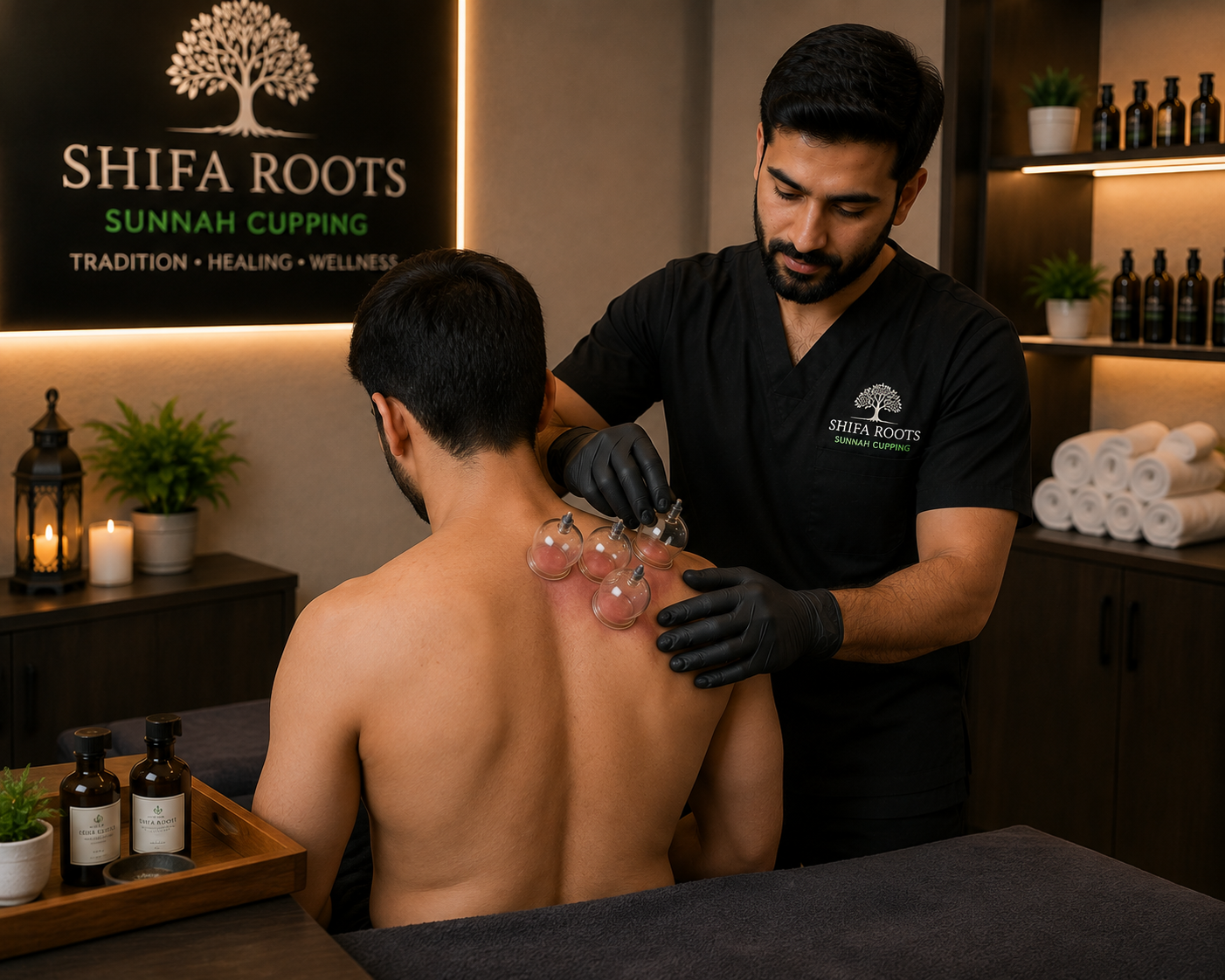
We begin with a consultation to understand how long you've experienced stiffness and which movements are most affected, then tailor cupping placement to the shoulder, upper back and neck as needed. Frozen shoulder rarely affects the joint in isolation — tension often builds up in the surrounding upper back and neck muscles as the body compensates for restricted movement, which is why our sessions typically address a wider area than the shoulder alone.
Cupping therapy is traditionally used to support circulation and ease muscular tension in the treated area, and many clients find that regular sessions, alongside any physiotherapy or exercises recommended by a medical professional, form a useful part of their overall approach to managing frozen shoulder. As with all our services, we're clear that Hijama is a complementary therapy rather than a direct treatment for the underlying joint condition itself.
What to Expect
Focused Mobility Consultation
A focused consultation on your shoulder mobility and pain history. We'll ask when your symptoms started, which movements are most restricted, and whether you're currently working with a GP or physiotherapist, so we can tailor the session appropriately to your needs.
Targeted Therapy Placement
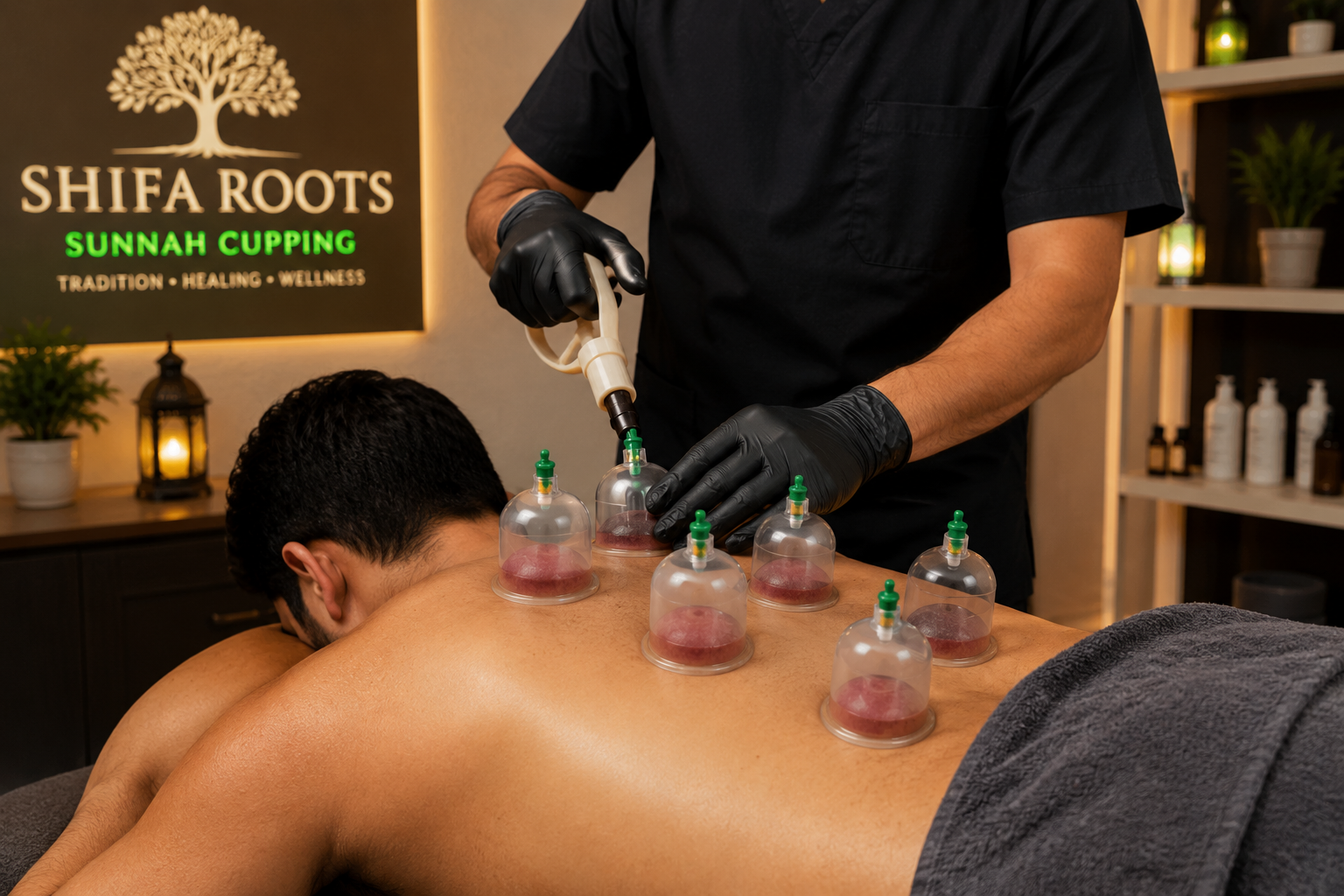
Cupping therapy targeted at the shoulder and surrounding muscle groups. Depending on your specific pattern of stiffness, your practitioner may focus on the front, back or top of the shoulder, along with the upper back and neck, using either wet cupping or dry cupping based on what suits you.
Gentle Movement & Aftercare
Guidance on gentle movement and aftercare between sessions. You'll leave with practical advice on what to do — and what to avoid — in the days following your session, to support your recovery without overloading the joint.
Who This Service Is For & Scheduling
Who This Service Is For
Clients booking frozen shoulder treatment Birmingham sessions with us are typically at different stages of the condition — some in the early, more painful 'freezing' phase, others in the longer 'frozen' stage where stiffness is the main issue, and some in the gradual 'thawing' phase looking for extra support as movement slowly returns. Because the condition can present quite differently at each stage, your consultation will always shape how we approach cupping placement and session frequency. If you haven't yet had frozen shoulder formally assessed by a GP or physiotherapist, we'd always recommend doing so before or alongside starting cupping sessions, particularly to rule out other shoulder issues that can present with similar symptoms.
How Often Should You Book?
Because frozen shoulder tends to be a gradual, long-running condition, many clients book fairly regular sessions — weekly or fortnightly — during the stiffer phases, then space appointments out as mobility improves. Your practitioner will talk through a sensible schedule based on how you respond to your first few sessions.
Combining With Physiotherapy
Frozen shoulder treatment Birmingham clients often get the most value from combining our cupping sessions with physiotherapist-guided exercises and stretches. If you're already following a physio programme, let us know — we're happy to time cupping sessions around your exercises and treat Hijama as a complementary addition rather than a replacement for that guidance.
Understanding Frozen Shoulder
Frozen shoulder develops when the connective tissue surrounding the shoulder joint thickens and tightens, gradually restricting movement in almost every direction. It's often described in three broad stages: an initial painful phase where movement becomes increasingly uncomfortable, a stiffer phase where pain may ease slightly but movement remains significantly restricted, and a gradual recovery phase where mobility slowly returns. The overall process can take anywhere from several months to a couple of years, which is part of why so many clients look for complementary, natural support like Hijama cupping to sit alongside their medical care during what can be a genuinely frustrating and prolonged condition.
Why We Address More Than Just the Shoulder: Because frozen shoulder restricts everyday movement so significantly, it's common for the body to compensate by placing extra strain on the neck, upper back and opposite shoulder over time. This is one of the reasons our frozen shoulder treatment Birmingham sessions often extend beyond the shoulder joint itself, addressing tension across the upper back and neck as part of a more complete approach to easing overall discomfort and supporting mobility.
Integrated Care & General Wellbeing
Working Alongside Your Medical Team
If you've been formally diagnosed with frozen shoulder, you may already be working with a GP, physiotherapist, or in some cases have discussed injections or other interventions. We're always happy to complement that existing care — our practitioners will ask about any current treatment or exercises during your consultation, so we can time cupping sessions sensibly around your broader treatment plan rather than working in isolation.
Realistic Expectations
Frozen shoulder is a genuinely slow-resolving condition, and we're careful never to suggest that Hijama cupping offers a quick fix. What many clients find valuable is the sense of relief from surrounding muscular tension that cupping can traditionally support, alongside the broader patience and self-care that recovering from frozen shoulder requires. We'll always be honest with you about what to realistically expect from your sessions.
Frozen Shoulder and General Wellbeing
Living with restricted movement over a long period can be genuinely draining, both physically and emotionally, and we recognise that clients booking frozen shoulder treatment Birmingham sessions are often looking for more than just physical relief — they're looking for a calm, supportive space where they feel properly listened to during what can be a slow and sometimes disheartening recovery process.
Practical Guidance & Session Preparation
Everyday Adjustments Clients Find Helpful
Alongside cupping sessions, many clients managing frozen shoulder find it useful to make small everyday adjustments — avoiding sleeping directly on the affected shoulder, being mindful about reaching overhead or behind the back, and pacing activities that involve repetitive shoulder movement. We're happy to talk through general, sensible adjustments like these during your consultation, while always deferring to your physiotherapist or GP for any specific exercise programme.
Setting Realistic Timeframes
Because frozen shoulder can take many months to fully resolve, we encourage clients to think in terms of a gradual, ongoing programme of frozen shoulder treatment Birmingham sessions rather than expecting rapid change after one or two visits. Reviewing progress together every few sessions helps us adjust cupping placement and frequency as your mobility gradually evolves over the course of your recovery journey, and we'll always be honest if something isn't working as well as we'd hoped.
Male and Female Practitioners
You can request either a male or female Hijama practitioner Birmingham for your frozen shoulder treatment session. Because this treatment often involves the upper back and neck as well as the shoulder itself, some clients have a strong preference here, and we're always happy to accommodate it wherever possible when you book.
Preparing for Your Session
As with our other cupping services, we recommend wearing clothing that allows easy access to your shoulder, upper back and neck, staying hydrated beforehand, and letting us know about any medication or other treatments you're currently using for your shoulder. If you've had recent injections or other medical interventions for your frozen shoulder, please mention this when booking so we can plan your session appropriately.
Session Pricing
Frozen shoulder treatment sessions start from Cheap Pricing, and we'll confirm the exact cost based on your treatment plan before your appointment.