
Sciatica Pain Therapy
Sciatica refers to pain that radiates along the sciatic nerve, often felt from the lower back through the hip and down one leg. At Shifa Roots, we offer targeted Hijama cupping sessions aimed at the lower back and surrounding muscles to help ease discomfort and support everyday mobility.
If you've been searching for sciatica pain treatment Birmingham, or specifically for Hijama for sciatica, this page explains how our sessions work and what to expect.
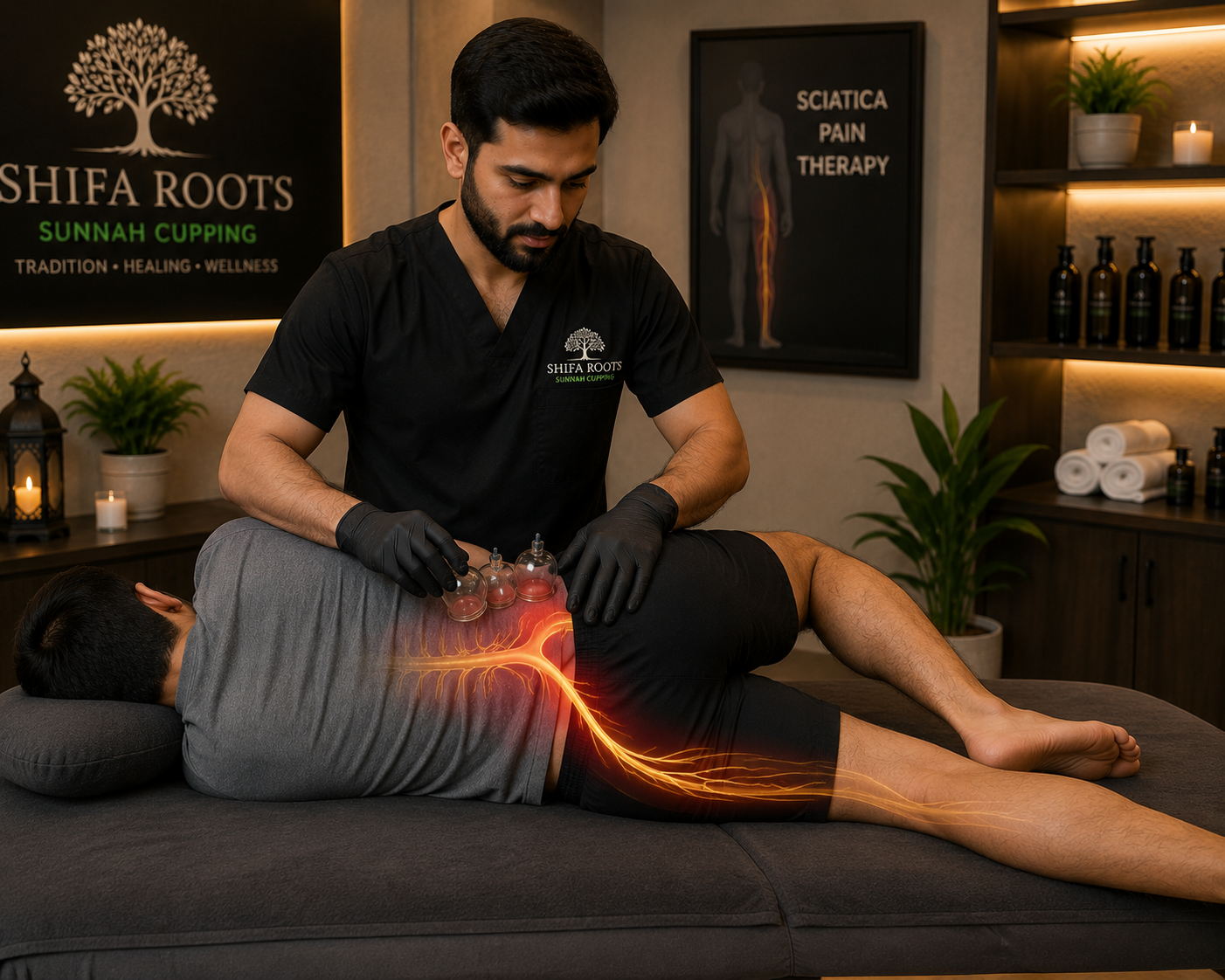
Common Sciatic Discomfort
Sciatic discomfort is one of the most common reasons clients contact our Hijama clinic in Birmingham. It's often described as a sharp, burning or aching sensation that starts in the lower back or buttock and travels down the leg, sometimes as far as the foot.
Daily Triggers & Impact
For many people, it flares up after long periods of sitting, physical strain, or ongoing postural habits, and can range from a mild, occasional niggle to something that significantly disrupts daily life.
While the underlying causes of sciatica vary and should always be properly assessed by a GP or physiotherapist, many clients look to Hijama cupping as a complementary, natural approach to sit alongside their medical care.
How Cupping May Help
Cupping therapy is traditionally used to encourage circulation and ease muscular tension in the areas surrounding the affected nerve. Many clients use Hijama as part of a broader approach to managing sciatic discomfort, alongside guidance from their GP or physiotherapist. The suction created during both wet cupping and dry cupping is thought, within traditional practice, to help release tightness in the muscles around the lower back, hips and legs — areas that are frequently tense in people experiencing sciatica.
It's worth being clear that Hijama for sciatica is a complementary approach, not a clinical treatment for the underlying causes of sciatic nerve pain, which can range from disc issues to muscular imbalance. We always encourage clients to continue working with their GP or physiotherapist for diagnosis and any necessary medical treatment, while using Hijama cupping sessions at our Birmingham clinic as additional, natural support alongside that care.
What to Expect
Personalized Consultation
A consultation to understand where your discomfort is felt and how long you've experienced it. Sciatic pain patterns vary from person to person, so we spend time understanding exactly where you feel it, whether it's constant or comes and goes, and what tends to make it better or worse before deciding on a treatment plan.
Targeted Treatment Plan
A treatment plan focused on your lower back, hips and legs as needed. Depending on your specific pattern of discomfort, your practitioner may focus primarily on the lower back, extend cupping placement along the hip and glute area, or address tension further down the leg — whichever combination makes sense based on your consultation.
Sterile, Single-Use Equipment
Sterile, single-use equipment for every session. As with every service at Shifa Roots, hygiene is non-negotiable, and every tool used during your sciatica pain therapy session is single-use.
Practical Aftercare Guidance
Aftercare guidance to support your recovery between sessions. You'll leave with practical advice on rest, gentle movement and what to expect over the following days, so you know how to support your body between appointments.
Who This Service Is For
Clients booking sciatica pain treatment Birmingham sessions with us range widely — from people experiencing their first flare-up after a period of heavy lifting or long car journeys, to those managing longer-term, recurring sciatic discomfort. Many have already seen a GP or physiotherapist and are looking for a natural, complementary option to use alongside that care, rather than instead of it.
Others are simply curious about Hijama for sciatica after hearing about it from friends or family and want to try a properly hygienic, professional Hijama clinic in Birmingham before committing to regular sessions.
Urgent Medical Advice: If your sciatica is severe, sudden in onset, or accompanied by numbness, weakness or loss of bladder or bowel control, please seek urgent medical attention rather than booking a cupping session — these can be signs of a more serious underlying issue that needs prompt clinical assessment.
Treatment Frequency & Integrated Care
How Often Should You Book?
This depends entirely on how you respond and how long you've been experiencing sciatic discomfort. Some clients book weekly sessions during a flare-up and then reduce frequency once things settle, while others prefer a more occasional, maintenance-style approach. Your practitioner can help you think through a realistic schedule after your first session, based on how your body responds.
Combining With Other Care
We always recommend treating Hijama for sciatica as one part of a broader approach, not a standalone fix. Many of our clients combine their sciatica pain treatment Birmingham sessions with physiotherapy, gentle stretching routines recommended by their GP, and lifestyle adjustments like improved desk posture or regular movement breaks. If you're already under the care of a physiotherapist or specialist, we're happy to work around their guidance and treat cupping as a complementary addition to your existing plan.
Male and Female Practitioners
As with all our services, you're welcome to request a male or female Hijama practitioner Birmingham for your sciatica pain therapy session — simply let us know your preference when booking. We accommodate all preferences respectfully and maintain strict cleanliness and privacy protocols.
Understanding Sciatic Nerve Pain
Lifestyle Factors We Often Discuss
During your consultation, we'll often talk through everyday lifestyle factors that may be contributing to your sciatic discomfort — things like how long you spend sitting each day, your typical sleeping position, whether your work involves repetitive bending or lifting, and how much regular movement you're getting. While we're not physiotherapists and won't prescribe exercises, understanding these factors helps us have a more informed conversation about what might be driving your sciatica pain and how Hijama cupping might realistically fit into your broader routine.
Sciatica and Everyday Movement
Beyond the treatment room, many clients ask what they can do day to day to support their sciatica alongside cupping sessions. While we always defer to a GP or physiotherapist for specific exercise guidance, general habits like avoiding prolonged sitting, taking regular short walking breaks, and being mindful of lifting technique are commonly recommended alongside sciatica pain treatment Birmingham sessions, and we're happy to discuss general, sensible habits during your consultation.
Client Experience & Preparation
What Clients Often Report
While individual experiences vary considerably and we're careful not to make specific medical claims, many clients tell us that regular Hijama cupping sessions form a useful part of how they manage ongoing sciatic discomfort, particularly when combined with physiotherapy, stretching and lifestyle adjustments. Every client responds differently, and we'd always rather set realistic expectations upfront than overpromise on what a single session is likely to achieve.
Client Experience at a Glance
From the moment you book a sciatica pain treatment Birmingham session with us, our focus is on making the experience as informative and comfortable as possible. You'll be greeted by your chosen practitioner, given time to explain your symptoms fully, and talked through exactly where cupping will be placed and why, before your session begins. Nothing happens without a clear explanation first, and you're always welcome to ask questions or pause the session if anything feels uncomfortable.
Preparing for Your Session
As with our general Hijama cupping service, we recommend eating lightly beforehand, staying hydrated, and wearing comfortable, loose-fitting clothing that allows easy access to your lower back, hip and leg. If you're currently taking pain medication, muscle relaxants, or blood-thinning medication, please let us know when you book so we can advise you appropriately ahead of your appointment.
Session Pricing
Sciatica pain therapy sessions start from Cheap pricing, in line with our standard Hijama cupping pricing. We'll confirm the exact cost for your specific treatment plan before your appointment.
Important Medical Notice: Hijama is a complementary therapy and is not a substitute for medical diagnosis or treatment. If you are experiencing severe or worsening sciatica, please consult your GP.